Tag Archives: design

The give and take of MDP alum Matthew Manos’ thriving social impact design practice

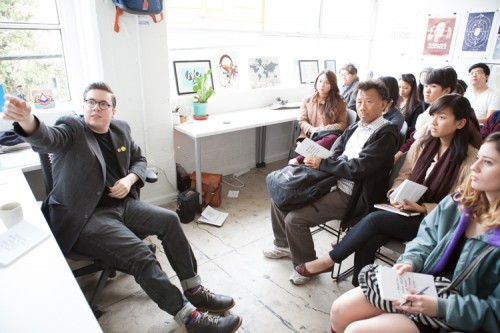
Art Center students visit alum Matthew Manos' verynice design studio in Venice. (Photo by Stella Kalinina)

Art Center students visit alum Matthew Manos’ verynice design studio in Venice. (Photo by Stella Kalinina)

Professionally speaking, alumnus Matthew Manos (MFA 12) was precocious. At age 19 in 2008 he founded his own design studio, verynice, a service free to nonprofits using design as a tool for problem solving. By 2012, with a full-time staff of two, verynice was providing $300,000 in pro bono services.

Today, with offices in Los Angeles and New York and a staff of 10 and growing, Manos’ innovative studio has donated the equivalent of more than a million dollars in services to some 250 nonprofit organizations with the help of skills-based volunteers around the globe. Manos’ book, How to Give Half of Your Work Away for Free, open-sources his 50% pro-bono business model. His givehalf.co platform is inspiring other companies to do the same.
Continue reading

Los Angeles Times praises Art Center’s “smart growth” to meet increased demand for fresh design talent

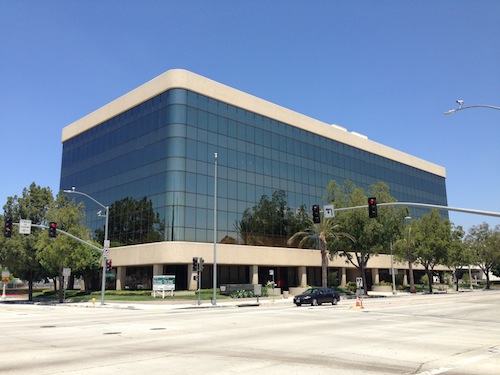
The newly purchased Mullin Building, at 1111 Arroyo Parkway

The newly purchased Mullin Building, at 1111 Arroyo Parkway

We’ve been talking with Los Angeles Times’ higher education reporter Larry Gordon for a few weeks  about businesses aiming to sharpen their competitive edge by hiring top design talent. Gordon was intrigued by the notion that corporate leaders have realized market domination in the new innovation economy requires a brain trust of superior design thinkers. Savvy consumers have become more and more discriminating in their choices when purchasing everything from smart phones to urban mobility devices.

Art Center’s record enrollment growth since 2009 is a clear signal of the global increase in demand for innovative design education. The booming interest in design also illustrates corporations’ recognition of the expanding importance of the creative professions to a healthy global business climate. And this increasingly design-centric paradigm is exemplified by Art Center’s continued physical expansion, with the completion of the new HQ for the Fine Art and Illustration Departments at 870 Raymond and the announcement of the purchase of the Mullin Building at 1111 Arroyo Parkway.

Read on to see what Gordon discovered in his conversations with Art Center students and faculty about how the recently opened “Post Office Building” is meeting their needs for light-filled visual art making spaces, and what President Lorne Buchman had to say about the College’s latest acquisition along Pasadena’s “Innovation Corridor.”

Graduate Industrial Design alumna snags Rolex Young Laureate Award for newborn hearing screening device

Neeti Kailas, 2014 Rolex Young Laureate. India, 2014. ©Rolex Awards/Ambroise Tézenas

Neeti Kailas, 2014 Rolex Young Laureate. India, 2014. ©Rolex Awards/Ambroise Tézenas

Neeti Kailas (MS 13 Industrial Design) heard the news just in time to book a flight to the press conference at The Royal Society, London. Rolex had named her one of five Young Laureates for her work developing a hearing screening device for newborns in India. “I was very happy and excited [to be selected],” said Kailas. “The award will help the project advance, and the visibility is great for a start-up like mine. It is an honor to be selected as part of the community of laureates. They are all visionaries and change-makers.”

She and her husband, Nitin Sisodia, who was named one of the 2013 ‘35 Innovators Under 35’ by MIT Technology Review, identified hearing screening as a critical yet ignored aspect of healthcare across developing countries. Together they launched the Sohum innovation lab and created a functioning prototype that has been tested on adults. They are preparing for clinical trials in 2015.

Continue reading

From Apple Stores to apples for the teacher: Eight Inc. donates design educational nonprofit DonorsChoose.org

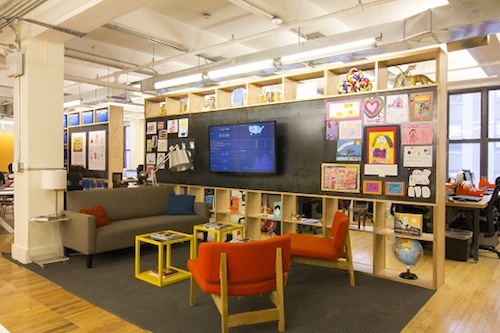
DoonorsChoose.org offices after Eight Inc. redesign

DoonorsChoose.org offices after Eight Inc. redesign

Eight Inc. is a leading-edge branding and design firm owned and run by Art Center alums Tim Kobe (BS 82 Environmental), who is also a college Trustee, and Wilhelm Oehl (BS 94 Product). In the fifteen years since its inception, Eight Inc. has flourished by generating iconic designs across a broad spectrum of projects and disciplines from conjuring innovative retail experiences for the Apple Store to the architectural award-winning residential developments in New Orleans following Hurricane Katrina.

Eight Inc. (which now employs more than a few Art Center alums) has recently tackled another design solution for the greater good. In April, the firm announced it would donate design services to DonorsChoose.org to renovate its new headquarters in New York City. DonorsChoose.org is a national nonprofit that has channeled over $237 million in books, art supplies, field trips and resources to more than a million students in low-income public schools.

Continue reading

The success of Safe Agua: Students design solutions to water scarcity in Colombia

Alumnus Isaac Oaks offers a student’s perspective on the Safe Agua Colombia project, just published in the new Designmatters book, Safe Agua Colombia (June 2014). Continuing to build on the investigations and experiences of the award-winning Safe Agua Chile and Safe Agua Peru projects, Oaks traveled as part of a student team to Altos del Pino, in Bogotá, Colombia, to co-create innovative technical design solutions with local families, seeking to overcome some of the social issues created by water poverty and to make an impact through resulting products and systems. 

The Designmatters Safe Agua project fostered my personal exploration into the area of community design co-creation. The experience began with an immersive 12-day research trip to outskirts of Bogotá, Colombia, in fall 2013, where I was among a small team embedded with families in the asentamiento of Altos del Pino. Our focus was designing for the all too common problem of extremely limited water supply. Because they are only provisionally connected to the official water grid, each household has access to a small hose of running water for just one hour every eight days. This highly restrictive schedule became the catalyst for our designs.

Continue reading

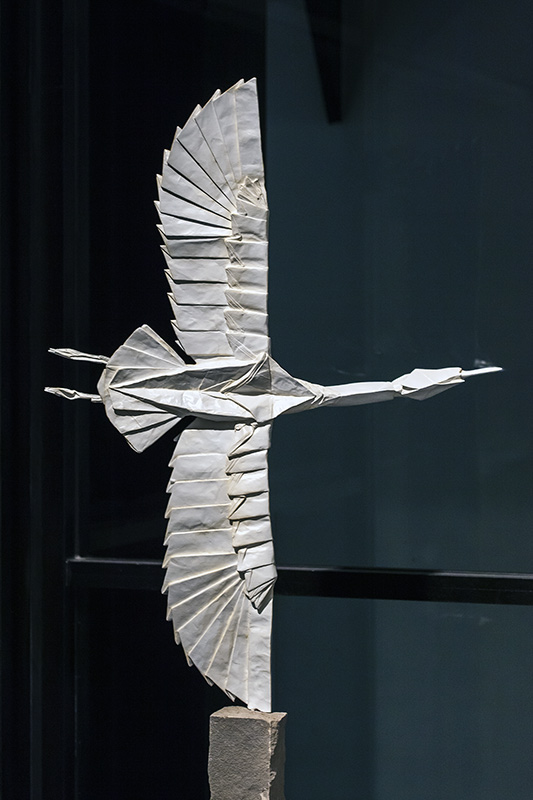
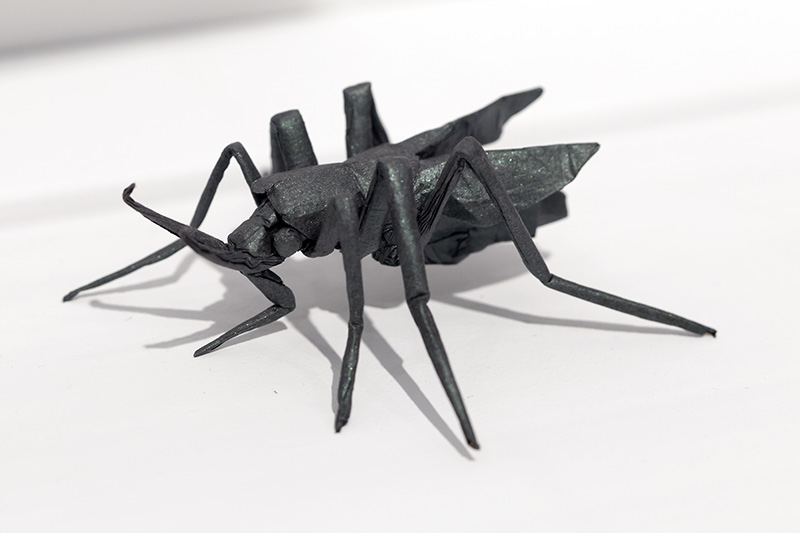
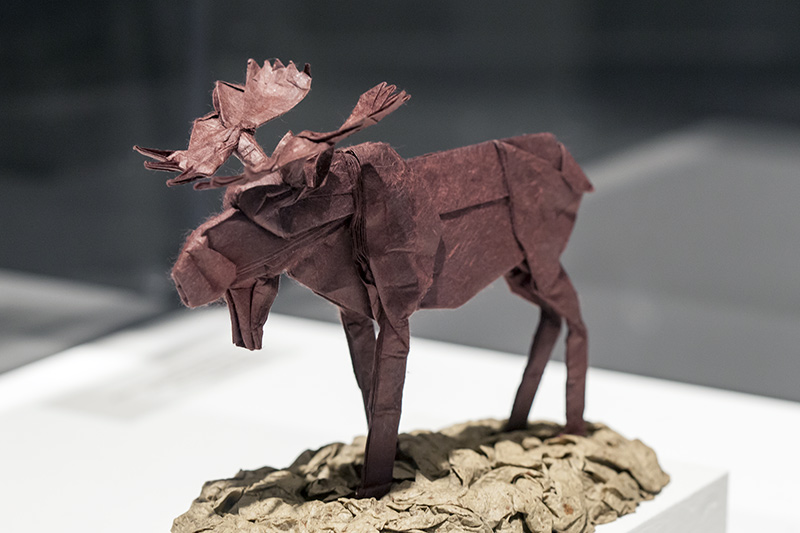
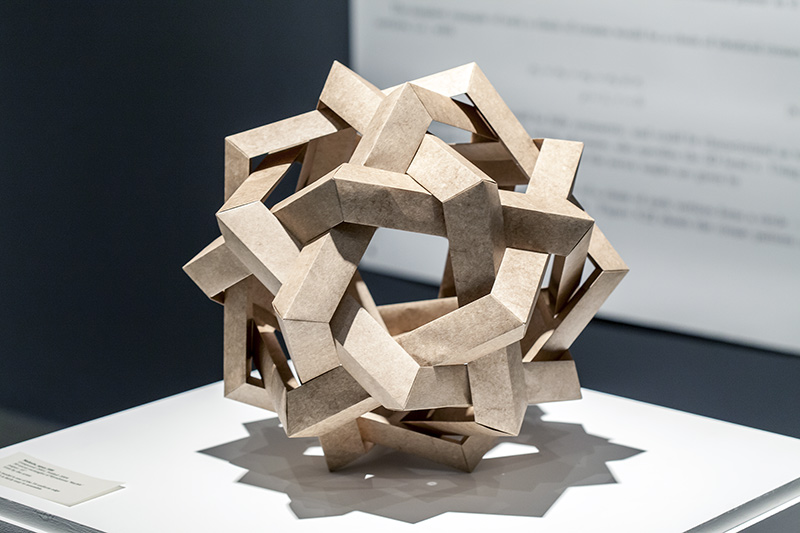
Robert Lang’s new FOLDED show exposes origami’s roots in design, contradiction and conflict

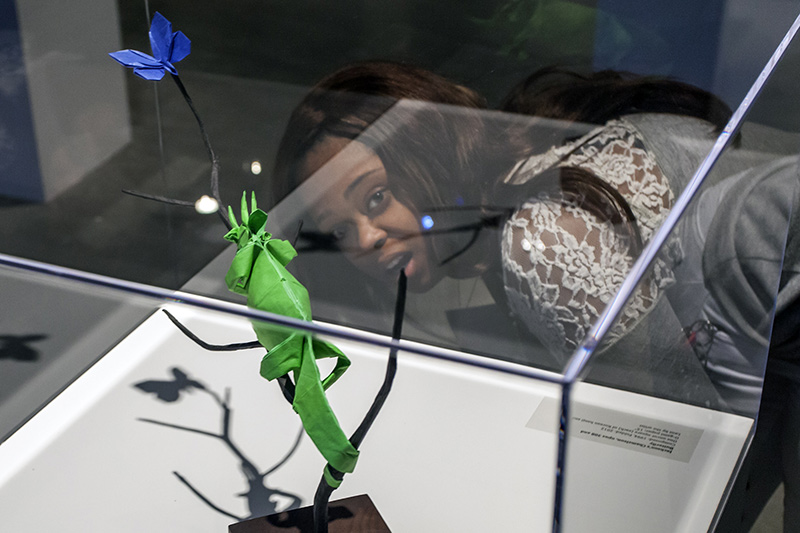
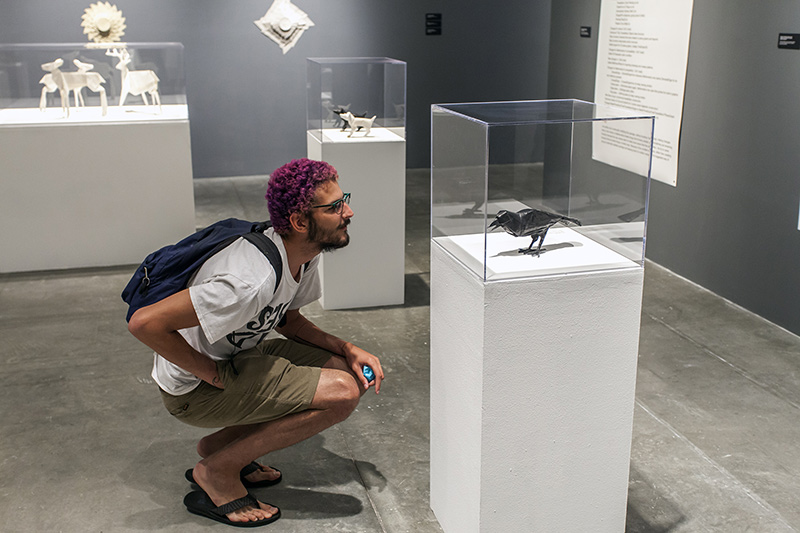
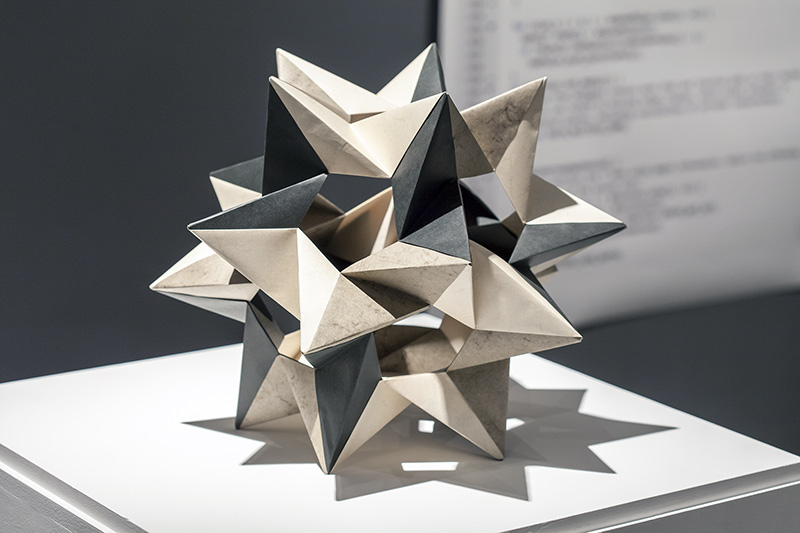
Origami seems an odd and roundabout way to arrive at the realistic likeness of a scorpion. Clay would be faster, more direct, less convoluted. And yet there’s an edgy charm to it—the calculated, maybe obsessive, brain teasingly affectionate practice of folding paper. It is, in essence, design. Good design.

It’s an old process. After paper was invented in about the 2nd century CE, it took another 400 years to migrate from China to Japan, and a few centuries more to infiltrate Europe. Folding followed along, creased and sharp, and largely ignored as a serious art until the middle of the last century when poverty-stricken factory-worker dropout Akira Yoshizawa changed everything. His experimentation risked tradition, and his introduction of a wet-folding technique expanded origami’s visual vocabulary, inviting greater artistic expression.

Continue reading

New series of alumni video profiles launches with this profile of tech design visionary Yves Behar

Yves Behar has spent much of the past two decades inhabiting the rarefied air at the peak of design innovation. After graduating from Art Center College of Design in 1991 with a degree in Product Design, Behar became an early adopter in bringing a design ethos into the tech space, conceiving product identities for the likes of Apple and Hewlett-Packard. And in the years since founding his own forward-thinking industrial design and branding firm, Fuseproject, Behar has become something of an iconic brand in and of himself.

The above video represents the first in an ongoing series of video profiles of Art Center’s vanguard of mold-breaking, creatively audacious alumni. Behar welcomed Art Center’s video team into the hive of creative activity that is Fuseproject’s warehouse-like studio in San Francisco’s Mission District. The cavernous space was designed to promote collaboration and co-creation, with its long communal lunch table covered with bountiful fruit bowls full of healthy snacks, ripe for the picking. SodaStreams are stationed throughout the facility. And broad worktables are covered with mockup designs for top secret products that will most certainly one day make many lives easier, if not better. We hope you’ll come away as inspired as we were by Behar’s reflections on his own creative trajectory and the ways in which he’s continuing the Art Center tradition of learning to create and influencing change.

Scholarship seeds a new generation of sustainability designers

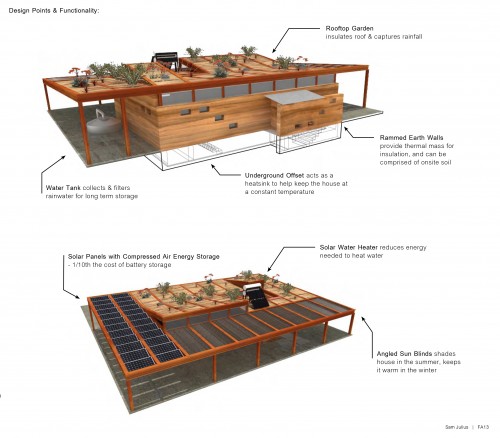
From Sam Julius' 'Sustainable Urban Housing' entry

From Sam Julius’ ‘Sustainable Urban Housing’ entry

Our homes, cell phones and laptop screens are filled with thoughtful and functional design. But what about art that creates social impact? Can design influence change on global issues like sustainable housing, access to clean water and empowering disadvantaged women?

Projects featuring practical solutions to these concerns designed by Product, Illustration and Environmental Design students were selected as the winners of the 2013-2014 Denhart Family Sustainability Scholarship competition. Created by a generous gift from Gun Denhart, and son, Christian Denhart (BS 10 Product), the prizes are annually awarded to students addressing environmental and social causes in their work. The scholarships are devised to increase awareness of art and design’s unique capacity to advance sustainability.

Continue reading

Industrial Design grad Lindsay Nevard on her research into designing a better patient experience

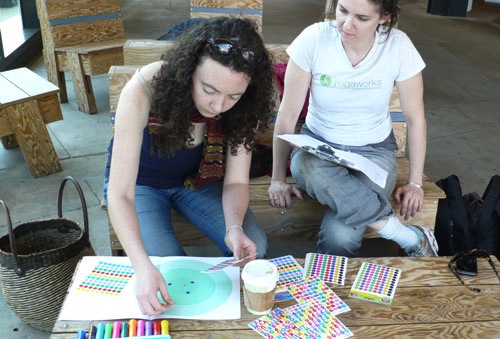
Grad ID student, Lindsay Nevard interviews patients in the service of developing her products for improving patient experience

Grad ID student, Lindsay Nevard interviews patients in the service of developing her products for improving patient experience

Lindsay Nevard is a recent graduate of Art Center’s Graduate Industrial Design program whose thesis focused on improving patient outcomes in physical therapy. For the Dotted Line, Alex Moore interviewed Lindsay about the process of design research, juggling the roles of both designer and researcher, and the potential uses of technology to enhance patient experience.

Alex Moore: I think a lot of people are unfamiliar with the idea of design research. Could you elaborate?

Lindsay Nevard: Design research is doing the research so the product is smart. That means making sure that people are going to like it, that people are going to be able to use it easily, and that it fills a need. It can be as big as: “We are going to create something totally new, what are consumers’ latent desires?” Or it can be as detailed as: “How much should our new product cost and what color should it be?” In both cases it is really important to understand the user you are targeting. You also need to determine the appropriate questions or methods to get the answers you need. When doing interviews, you have to get people comfortable talking and into the right state of mind. You try to coax people into a more playful space. If you give someone a literal map of their workplace, they are going to give you a literal answer. But if you give someone LEGO bricks, they can’t build a literal interpretation and you will often gather more interesting information.

Continue reading

Watch our new video: Ray Eames, the Original Design Influencer

Last month Art Center’s Williamson Gallery grew to resemble a young girl’s dreamscape, as a set of hearts in the bold fanciful hues of love itself burst to life on its walls. In fact, we challenge anyone to not emerge full of child-like wonderment (and more than a little Eames chair-envy) after an amble through “Ray Eames: In the Spotlight,” a comprehensive tribute to the female half of the legendary Eames Office. The show, curated by the Eames’ granddaughter, Carla Hartman, explores Ray’s unique creative gifts and specific contributions to the vast body of iconic design work she created in conjunction with her husband and chief collaborator, Charles.

We were so moved by what we learned of Ray’s spirited, intuitive and deeply empathic approach to design and collaboration, we were inspired to produce the above video about the ways in which the Eames Office in general (and Ray specifically) inspired members of the Art Center community to push boundaries and imbue work and life with a sense of play.