Tag Archives: Los Angeles

Artfully disrupting LA’s ad space: Q&A with The Billboard Creative contest-winner Photography student Shannon Rose

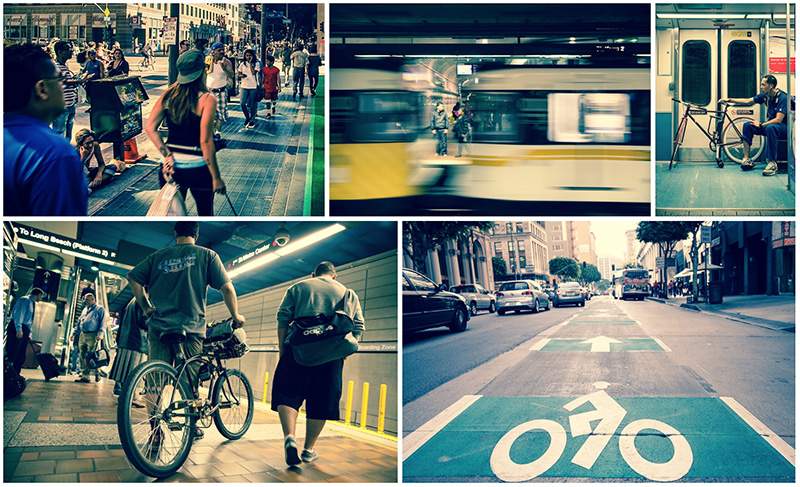
Current Photography student Shannon Rose's Billboard Creative contest-winning image

Current Photography student Shannon Rose’s Billboard Creative contest-winning image

As screen-dwelling denizens of the Digital Age, our visual landscape has become increasingly cluttered with advertisements. Big and small, overt and implicit, our world online and off is increasingly filled with various forms of marketing—obvious and imperceptible, implicit and explicit, loud and quiet, artful and otherwise. And living in LA, home to Sunset Boulevard and some of the most iconic billboards in the world, raises the ad-saturation level significantly. But relief is in sight, both literally and figuratively, thanks to current Photography student Shannon Rose, whose image was chosen for one of thirty-three coveted slots in Billboard Creative’s contest calling for artists to submit work to occupy LA’s abandoned billboards.

The Dotted Line recently caught up with Rose, who took time out from the fourteen-hour days she’s been putting in on another freelance assignment to answer a few questions about her creative process and thoughts on the role of public art can play as an antidote to advertising overload.
Continue reading

LACMA celebrates graphic design with a show featuring alums Alvin Lustig and Elaine Lustig Cohen

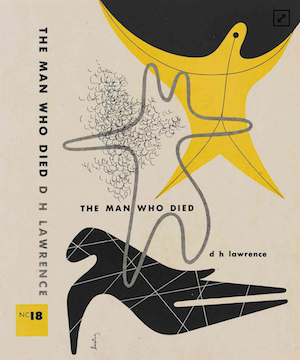
Alvin Lustig, The Man Who Died, 1947. Book cover published by New Directions. (Image courtesy of LACMA)

Alvin Lustig, The Man Who Died, 1947. Book cover published by New Directions. (Image courtesy of LACMA)

Eye on Design recently and rightly hailed LACMA’s vow to incorporate more graphic design exhibitions into its programming. The museum kicked off this new series of shows with Vitality of New Forms: Designs by Alvin Lustig and Elaine Lustig Cohen, an expansive exhibition, on view through July 4, 2016, featuring 56 works by a pair of influential and innovative designers who also happen to be ArtCenter alums.

The move to celebrate and elevate the work of talented designers is just the latest sign that LA’s signature cultural institution has also become its most dynamic and nimble, further fortifying its growing reputation as a world-class museum and one of LA’s most vital cultural resources.

This decision to feature the work of ArtCenter alums in the inaugural show in this series is a huge endorsement for College’s contribution to the field of design. And as Diana Thater: The Sympathetic Imagination continues to draw crowds and critical raves, LACMA is making a strong statement about ArtCenter’s contribution to our creative landscape, both locally and globally.


HQ:LA Part 1 Noah Minuskin – Creatives calling LA home

Upper-term Illustration student Noah Minuskin in his studio. Photo: Stella Kalinina

Upper-term Illustration student Noah Minuskin in his studio. Photo: Stella Kalinina

For creative professionals, the allure of Los Angeles goes far beyond ‘You can’t beat the weather.’ In this series, ‘HQ:LA,’ we invite you to meet three thriving entrepreneurs who have made the City of Angels their headquarters. Today: Upper-term Illustration student Noah Minuskin.

From ArtCenter’s leafy Hillside Campus in the hills of Pasadena, head 14 miles south on Interstate 5 and you’ll find yourself at the edge of the Arts District in Downtown Los Angeles.

It’s here, in an industrial area where artisanal coffee shops vie for the same space as scrap metal vendors, that you’ll find the pristine studio of tattoo artist and current ArtCenter Illustration major Noah Minuskin.

“It has a unique and raw energy,” says Minuskin, a Bay Area transplant, describing the neighborhood. “It’s generated by the creatives here, who are genuine, passionate and ambitious.”

Continue reading

7 inspiring and delightful nuggets of ArtCenter wisdom from the 2015 Core77 conference

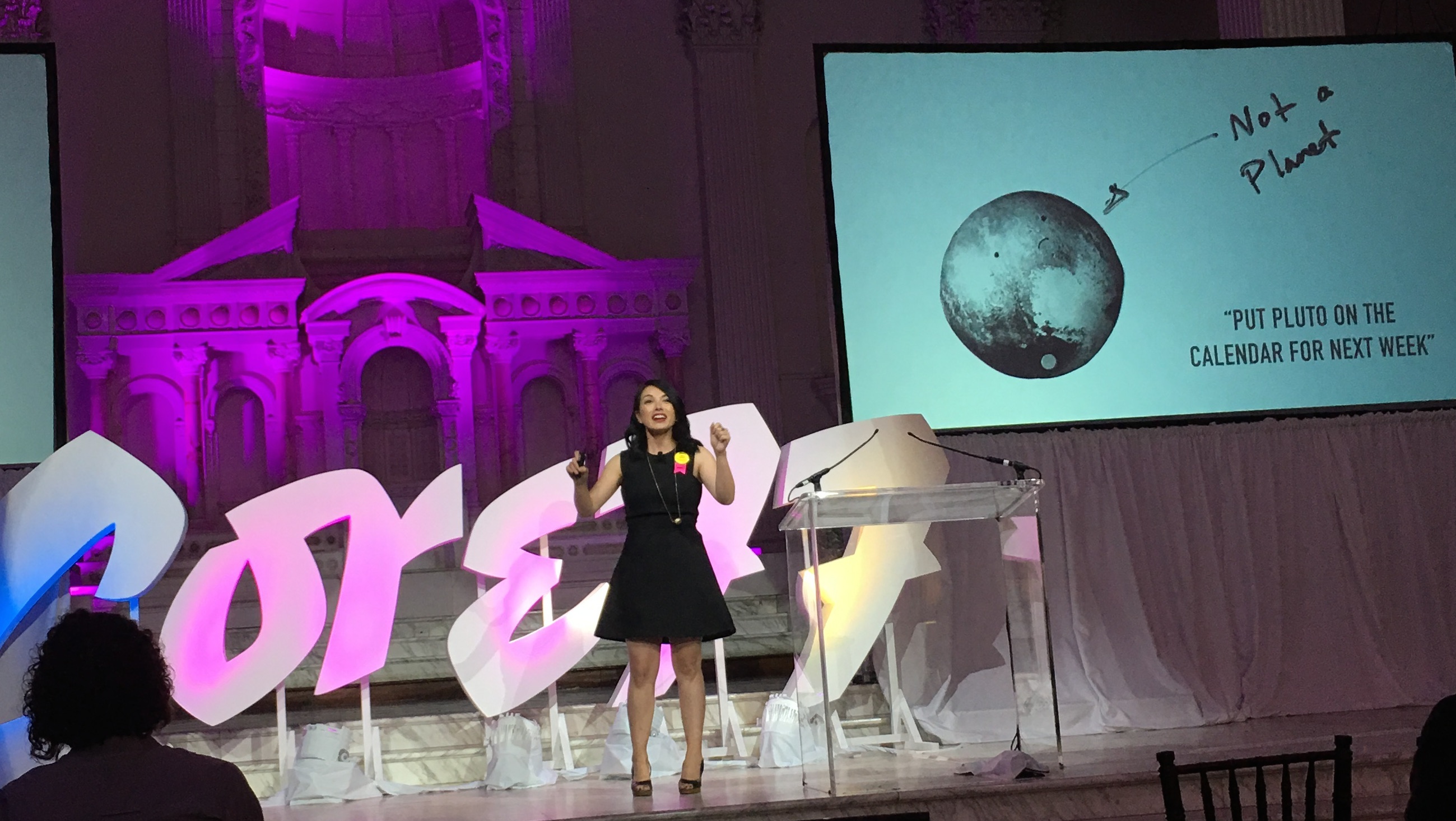
Alumna Jessie Kawata speaks at the Core77 conference.

Alumna Jessie Kawata speaks at the Core77 conference.

Core77’s second annual conference came to town last week and set up shop in downtown Los Angeles at Vibiana, the former cathedral now event space, which Core77 called “an architectural gem” and touted as a venue that once hosted a concert by Snoop Dogg (“If it’s good enough for Snoop, it’s good enough for us.”).

It was also good enough for seven members of the ArtCenter community who appeared on stage at the conference, whose theme was Designing Here/Now, and who delighted and inspired the packed audience with “thought-provoking ideas and projects that are years ahead of schedule.”

Appearing on stage were: alumni Nadine Schelbert, Matthew Manos, Jessie Kawata, and Javier Verdura, the latter appearing in conversation with Transportation Design faculty Eric Noble; Advertising and Graphic Design faculty Nicole Jacek; and former faculty Ravi Sawhney.

For your own inspiration and delight, we’ve assembled seven of our favorite ArtCentric quotes from the stage:

“Water has its own will. When you design with it you have to develop an understanding for that will. You can never truly control it, but you can entice it to behave a certain way.”

Nadine Schelbert (BS 02 Environmental Design)
Director of Design, WET

Continue reading

Jeff Wall on artifice, actuality and accident — and why he doesn’t make films

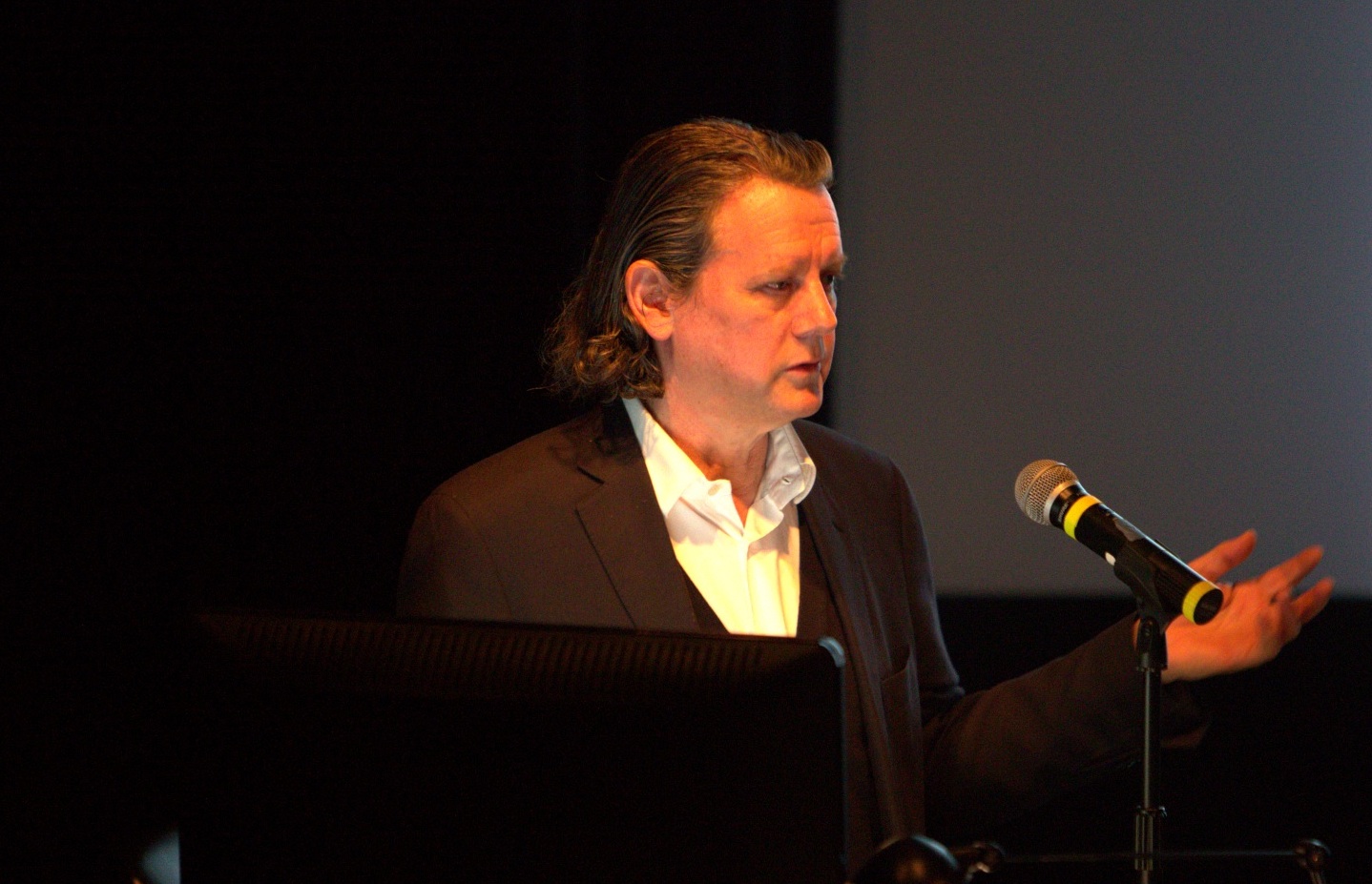
Jeff Wall spoke about his work and its influences. (Art Center photo by Juan Posada)

In the Grad Art Seminar series, Jeff Wall spoke candidly about his work and its influences. (Art Center photo by Juan Posada)

Vancouver-born and -based artist Jeff Wall is now living and working part-time in Los Angeles, which is good news for students at Art Center. A capacity crowd filled the L.A. Times Media Center at Hillside Campus last Tuesday night, eager to hear what he had to say.

Jack Bankowsky, who co-curates the popular Grad Art Seminar series with fellow faculty member Walead Beshty, introduced Wall, and reminded the audience of three of his works—opaque black and white prints—that are set in Los Angeles: Citizen (1996), a man lying on the lawn in a public park; 8056 Beverly Blvd., Los Angeles (1996), a cinema-turned-synagogue, framed in a circular black vignette; and Office Hallway, Spring Street, Los Angeles (1997), a man in a dimly lit, nondescript hallway.

Continue reading

Artworld luminaries and Art Center alums pay tribute to Mike Kelley’s legacy as an educator

Of all the ways Mike Kelley has been celebrated for his pivotal contributions to contemporary art, since his death on January 31, 2012, his impact as an educator may be the most significant aspect of his legacy to go relatively unexamined, if not unsung. Kelley was a faculty member of Art Center’s Graduate Art Department from 1992 to 2007. And during his time teaching at Art Center, Kelley mentored such monumental talents as video artist Diana Thater (who now chairs the department from which she graduated), multimedia artist Pae White, installation artist Jennifer Steinkamp and Fine Art faculty member Jean Rasenberger.

In the above video, inspired by Kelley’s MOCA retrospective, these artists examine the ways in which Kelley influenced the kind of artists they’ve become, the work they create and, perhaps most importantly, how they go about crafting and sustaining a life as an exhibiting artist. Kelley has often been credited with helping raise the clout and visibility of LA’s art scene when his career took off and he declined to follow the well-worn path previous west coast supernova artists had followed to New York. As one of the first internationally acclaimed artists to root himself in Los Angeles, Kelley was, in essence, laying the groundwork for his students and their contemporaries to do the same.

If these artists’ upwardly-tilting career paths are any indication, Kelley’s impact on his students, his city and his creative discipline only gets deeper as time goes on.

The future of the digital novel is here thanks to Art Center faculty members Norman Klein and Margo Bistis

I20C2.3map

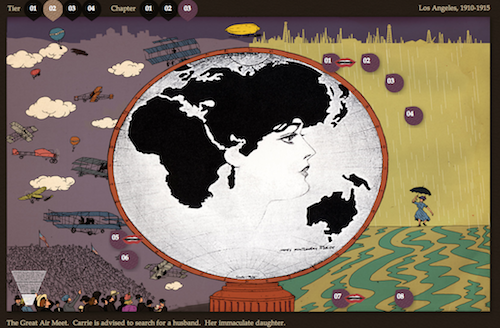
Built with a team of artists and designers, Art Center Humanities & Sciences faculty Norman Klein and Margo Bistis released The Imaginary 20th Century, a ‘wunder-roman’ online narrative engine where fact and fiction split off and return to each other to tell the story in a unique form.

The Imaginary 20th Century is a tale of seduction, as well as espionage; of archiving and the transitive poetics of excavation. According to legend, in 1901 a woman named Carrie selects four men to seduce her, each with a version of the coming century. Inevitably, the future always spills off course. We navigate through the suitors’ worlds, follow Carrie on her travels and discover what she and her lovers forgot to notice. In 1917, Carrie’s uncle sets up a massive archive of her life.  For decades, Uncle Harry had worked for the oligarchs of Los Angeles erasing crimes that might prove embarrassing.  Thus, as he often explains, seduction itself is a form of espionage. In 2004, this archive was unearthed in Los Angeles.

Continue reading

Sweet bread, technology and democracy: behind the scenes at #techLA

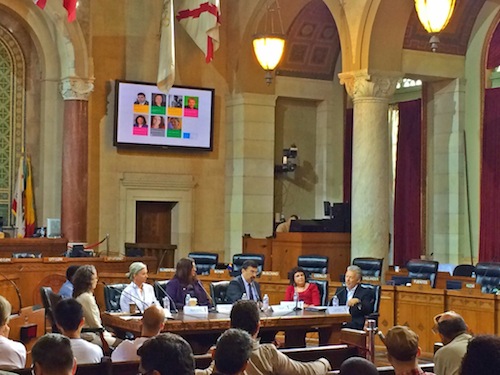
Amy Shimshon-Santo (far left) moderates the #techLA panel at City Hall

Amy Shimshon-Santo (far left) moderates the #techLA panel at City Hall

“Mmm, pan dulce,” said Mayor Eric Garcetti. Around the Green Room table behind the Los Angeles City Council Chambers, diverse leaders gathered around cafecito and conchas de vainilla o chocolate. It was 8:30 a.m. on a cool Saturday morning. Our disciplines ranged from transportation and interactive design to Smart Grid technologies, and from electric vehicle infrastructure and urban planning to community economic development.

We came together at the invitation of Mayor Eric Garcetti and Peter Marx (Chief Innovation and Technology Officer) to galvanize the technology track of #techLA– the city’s inaugural Technology and Innovation Conference held in City Hall.

Tasked by Marx with facilitating a panel on the future of mobility, I seized the opportunity to spark an interdisciplinary conversation on the topic. Representing Art Center with me were two respected innovators: Geoff Wardle (Executive Director of the Graduate Transportation Design program) and Maggie Hendrie (Chair of the Interaction Design undergraduate program). Later that day, Art Center Graduate Transportation student, Retro Poblano, also presented his research on automated shuttles to the public.

Continue reading

Creative disruption: Image strategists on photography’s new frontier

CicLAvia

Photographs by Annenberg Apprentice Dave Koga are part of Our Story, a digital visual narrative he curated in collaboration with CicLAvia.

“The advent of new technologies and a global population consumed by social media have turned photography on its head,” says Dennis Keeley, chair of Art Center’s Photography and Imaging Department. “The profession now demands a daunting versatility for survival—including skills in entrepreneurship, computational competency and critical thinking. Image-making now extends well beyond the traditionally constructed photograph to more immediate and interconnected processes. These contemporary practices and ideas utilize art, science and communications, and demand an intellectual flexibility, collaborative spirit, and a willingness to engage the world with strategy.”

To prepare photography students to meet the demands of this rapidly changing profession, Keeley and his colleagues developed a pilot class this Spring, Creative Disruption: Beyond the Classroom. Co-led by Everard Williams, Ann Cutting and Elisa Callow, the class embeds students in local nonprofits where they’re given a creative challenge and work in collaboration with the partner organization to tackle that challenge.

The class is part of an Art Center study, funded by a grant from the Annenberg Foundation, investigating and testing models for the future of photographic education.

Read on to learn about our first two Annenberg Apprentices, and their innovative work with two community-based organizations, CicLAvia and the Japanese American Cultural and Community Center.

Continue reading

Expand your mind without emptying your wallet

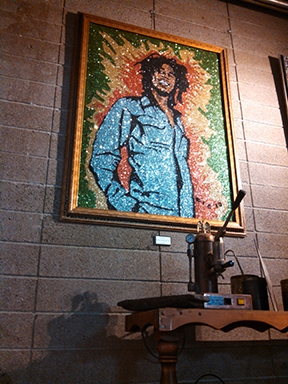
Glitter art on view at Jones Coffee Roasters. Photo: Teri Bond

Glitter art on view at Jones Coffee Roasters. Photo: Teri Bond

It’s the last few weeks of the term, and your top priorities are probably work, sleep and the next cup of coffee. But what about re-charging your creative batteries?

Art Center is nestled within one of the most innovative and entrepreneurial environments in the world. But be honest: When was the last time you pried yourself away from your projects and prototypes to find inspiration among Los Angeles’ vast creative riches?

We ask you this not to taunt or torment you about artistic opportunities missed. Really we’re here to simply offer you some incentive to take a break from your creative toils to remind yourself that great art and design is not created in a vacuum. Or a wind tunnel, post office or hillside haven.  It requires stimulation. Don’t worry. We’ve got you covered with the suggestions below.

Try the hidden gem on Fairfax, Family, which is stocked with a unique selection of art books, prints and zines you won’t find at chain retail stores. Be sure to check out the mini art gallery in the back. Just a few yards away is the Supreme store, where you’ll spend less time shopping than hanging out or taking advantage of the indoor skate ramp. You might even run into Tyler, The Creator.

Closer to campus, you can get the best-of your much-needed coffee at Jones Coffee Roasters, where you may run into Art Center chairs or faculty. The open space is a great studying spot, and there is always interesting art on the walls.

Continue reading