Category Archives: Designmatters

Safe Agua Update

More Designmatters news: Change Observer has a nice write-up on Designmatters’ Safe Agua project, which we’ve written about here before, and which was the focus of an Art Center exhibition at the Cumulus conference held in conjunction with the Shanghai World Expo last month.

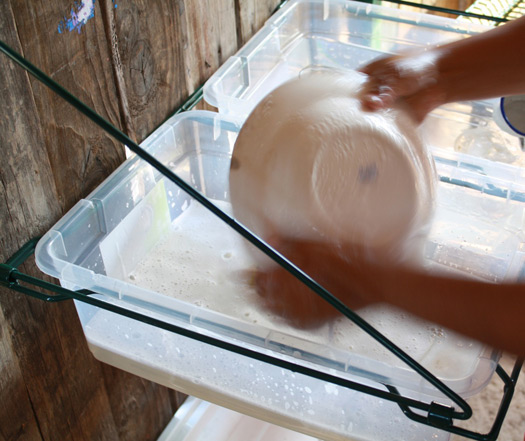
A woman in the campamento tests the Relava kitchen workstation prototype.

From the article: “For the teachers and students in the Environmental and Product Design departments at Art Center College of Design who signed up for the Safe Agua project in Chile, the first engagement with the problem was very close to home. An ‘empathy exercise’ at Art Center’s Pasadena, California, campus, before a two-week field trip to Chile, forced the 15-member team to experience what it’s like to limit their daily water intake to one 5-gallon bucket, and laid the groundwork for understanding the challenges faced by the slum families.”

Three of the projects from this studio—the Ducha Halo portable shower, ReLava kitchen workstation and Mila community laundry facility—have already entered the implementation and testing stages.

Read more: Project: Safe Agua

Better City, Better Life

The following post was written by Vice President and Director of Designmatters Mariana Amatullo for the Designmatters blog.

Art Center’s fall term started for us on the heels of an extraordinary week in Shanghai. Highlights included the opportunity to experience first hand the pageantry and wondrous scale of the 2010 World Expo; a spectacular day at TEDx Shanghai at the invitation of local curator extraordinaire Richard Hsu in which the theme that characterizes this city—fusion—was explored in myriad stimulating ways, meetings at the offices of Continuum and Frog, a window into a bygone China with a visit to the ancient city of Xitang, dinner with local alumni Marcus Lui and Clement Yip, and the presentation of the Safe Agua project at the Expo’s UN Pavilion and at Tongji University in the context of the educational Cumulus Conference Young Creators for Better City, Better Life.

Seeing through educational collaborations that go from the classroom into the world falls squarely within the Designmatters mandate, but even by our exacting standards of “tangible” outcomes, Safe Agua stands in a league of its own given the accelerated curve of implementation of some the solutions proposed by our students, and the depth of ongoing engagement we have with our partners at the Innovation Center of Un Techo Para mi Pais in Santiago and with the communities we are working with.

Shanghai was a global stage that allowed us to showcase the depth of all of the projects components with the Safe Agua exhibition and be there together with the exhibition’s lead team (David Mocarski, Penny Herscovitich, Daniel Gottlieb, K C Cho, Stephanie Stalker, Snow Dong and Ramon Coronado) and two of our partners from Un Techo, Andres Iriondo and Ignacio Gonzalez, to partake in the kudos from peer institutions worldwide.

We are now preparing to share the exhibition with our community at Art Center next spring. Around the same time, the project’s publication Safe Agua, will be hitting bookstores throughout the country, courtesy of DAP. Much to look forward to indeed!

Design Education and Designing for Change

Vice President and Director of Designmatters Mariana Amatullo has a wonderful piece up at Core 77 about design education and designing for positive social change.

Amatullo writes: “Historically, designers have always strived to create positive social change, and many celebrated efforts—think back to the Bauhaus—started in schools.

Design intervention by Gavin Alaoen as part of a Graphic Design studio, Graduate Media Design

Both of those things remain true today. In fact, design education has a larger role than ever to play in challenging the status quo around the wicked problems of a crowded planet. Despite, and perhaps because of, the world being in such turmoil, this is a very exciting time for design and designers. I firmly believe that with an expanded tool kit, designers can be instrumental contributors to a conversation about the future that it is getting increasingly layered and multidisciplinary. If we are ever to reduce or curtail dire societal ills and achieve sustainable development—by definition, prosperity that is globally shared and environmentally sustainable—responsible design needs to be front and center as part of the equation.”

Check out the article, and view some student-made PSAs, at Core 77: Deserve Your Dream: Design Education and Advocacy

Just Add Water

The following post was written by 5th Term Transportation Design student Tom Harezlak for the Designmatters blog.

Who needs an alarm clock when you can wake to the sound of a choir of monks?

NikolausKloster, a 600 year-old monastery in Germany, has an atmosphere that I would describe as a charming castle mixed with frat house. This special place was home to me and 23 others for a week as we learned about key issues of sustainability and attempted to tackle some of them. This was the second Sustainable Summer School, and I was grateful to be sponsored as attendee by Designmatters, the social impact design department at my school, Art Center College of Design.

“Summer” is a loose term, however, because September in Duesseldorf can get quite cold as I discovered. The warmth of my company was tremendous; a point that illustrated the value of bio-diversity. Our culturally diverse group hailed from nine different countries and this added richness to the experience. All the workshop participants were either design students or practicing designers, but we were in the company of a philosopher, sociologist, artists, a CEO and ecological researchers. The program was born out of collaboration between faculty from the Wuppertal Institute for Climate, Environment and Energy and Ecosign, an ecologically focused design academy.

For the week we stayed in this sanctuary with little internet and poor cell reception; it was great. The brothers of the order made our food and much of it was grown on site. We left the countryside for one day to visit Cologne and hear expert speakers at Ecosign.

Biologists and a sociologist presented two points of view on swarms and swarm intelligence. Their research was fascinating and their debate heated. Experiments illustrated the dynamic probability of humans to behave like a swarm. All this while psychological factors would indicate that this behavior would never be predictable when applied to humans.

Another point communicated was that a group may be able to solve a problem that no one individual in the group is able to. Then it was up to our teams of designers to present the relevance we believed it had to design. Throughout the week I was elected to present as a native English speaker and because I was “the easiest to understand,” though there was a proper Brit on call. I suppose I have Hollywood to thank for that.

Continue reading

Safe Agua Project Celebrated in Shanghai

More great Designmatters news: The Safe Agua project, which we’ve told you about before, is the focus of an Art Center exhibition at the Cumulus conference, Young Creators for Better City & Better Life,  held in conjunction with the Shanghai World Expo in China. Throughout the conference, panel presentations about the collaboration between Un Techo para mi País (UTPMP) and Art Center will bring together the lead creative team of Safe Agua to discuss how design education can be a catalyst for societal change. (Mariana Amatullo, vice president and director of Designmatters, is tweeting from the event.)

The transdisciplinary Safe Agua team brought together 12 Art Center students from five majors who spent two weeks in Chile last fall to research and visit communities in desperate need of clean water. The team designed six innovative water solutions at a range of scales: a low-cost portable shower, a water purification kit for a 5-gallon bucket, a gravity-fed system to simulate running water, a multipurpose kitchen workstation, a community laundry and gathering space and a campaign and publication for people living in campamentos (“slums”) to share their own inventions. The families from Campamento San José, in preparation for real world implementation, tested prototypes from the class.

“Our ultimate goal is to create one Latin America, without abject poverty, where every family has a decent house and access to opportunities to improve their quality of life,” said Julián Ugarte, director of UTPMP’s Innovation Center. “Our work with Designmatters at Art Center has proven that that such a future is possible.”

Learn more about the program in this Icsid article and at the Safe Agua Chile blog, and be sure to check out the student-made video about the project below:

Mariana Amatullo Discusses New Designmatters Concentration

These are pretty exciting times at Art Center: this fall we’re launching a new Designmatters concentration. Core 77 recently caught up with Vice President and Director of Designmatters Mariana Amatullo to discuss this new course of study, offered to undergraduates wishing to focus on the use of art and design for meaningful social impact.

Amatullo says: “For us, it’s a great chance to educate artists and designers to think about becoming involved in local, national and global issues right at the strategic and leadership levels, the beginning of the life-cycle so to speak of an issue, instead of coming at it at the end to simply style or package a cause.
“For our students, it’s a great chance to connect academic practices to design-based explorations of real world issues. They have the opportunity to step into this space while still a student; at the same time, they’re also asked to step up in the way they look at, confront, research and address real world issues.”

Read more: The Designmatters Concentration at Art Center College of Design: Q&A with Mariana Amatullo, and follow Designmatters on Twitter.

Lighter Design for Solar-Powered Camel Packs

Change Observer brings us an update on the Camel Mobile Clinic, a system for transporting medicine via camel to remote African communities. The innovate solar-powered camel saddle packs were envisioned in a 2006 Designmatters project, Integrated Mobile Health Clinics for Remote Communities in Kenya, which was selected as a finalist in the World Banks’ Development Marketplace competition in 2007.
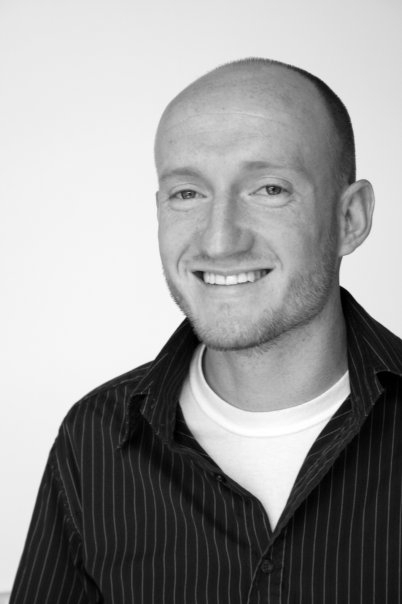
These remote African communities have few roadways and harsh terrain, making travel challenging. Camel convoys are the most efficient means of transportation for these areas, and the only way to deliver much-needed medicine and vaccines. A lack of equipment and refrigeration has made providing supplies to these areas almost impossible. The camel packs, powered by solar panels, can bring refrigerated medical necessities to these areas—in turn saving countless lives.

From the article: “Over the past year, further field-testing of the saddle-packaging system led to design modifications that are more in line with what local people use. In the original version, for example, a larger semi-circular contact area with the camel—which caused the saddle to slip if the animal changed its gait—was replaced with a smaller system with only one point of contact, making it more stable.”

The new design has been tested over short distances, and later this year it will be field-tested on a longer trek delivering medicine.

Read more: Camel Mobile Clinic Update and Integrated Mobile Health Clinics for Remote Communities in Kenya

Student-Made PSA Airing on CNN International

CNN International has donated air time to the student-made United Nations Population Fund television spot, When Mother Died, the Family Fell Apart, running it throughout the month of June. The PSA was created in a Designmatters studio that developed an integrated multimedia awareness campaign in support of UNFPA’s Safe Motherhood Initiative. Art Center Advertising, Graphic Design and Graduate Media Design students participated in the project.

United Nations Population Fund (UNFPA) is an international development agency that promotes the right of all humankind to a life of health and equal opportunity.

If you missed the spot on CNN, watch it below:

Designmatters Fellow Spending Summer at UNICEF

Graduate Media Design student Dustin York has been awarded an Designmatters Fellowship for 2010. He is spending this term at UNICEF headquarters in New York.

York is spending the summer working in the groundbreaking Innovation Unit at UNICEF, working with students from NYU to develop new strategies around, and devise new visual and sensory experiences for, telling UNICEF’s global stories.

York’s keen ability for communication and media design, his seasoned professionalism and, in his own words, “interest for shaping experiences to communicate across great distances, and bringing new ideas to life” made him the ideal candidate for appointment as Designmatters Fellow.

Join us in wishing Dustin a wonderful and productive summer in New York!

Summer Term Educational Partnerships Announced

Just because it’s Summer Term doesn’t mean things move any slower here at Art Center. Take a look at some of the educational partnerships happening this term:

Para Nuestras Hijas: This Designmatters TDS will tackle this issue of cervical cancer among Latinas in Los Angeles. Students will create a communications program designed to increase acceptance of the cervical cancer vaccine among young women in under-served neighborhoods such as East L.A., where few are getting the vaccine. The program will be implemented by the LAC+USC Medical Center at the conclusion of the studio.

PCI 50th Anniversary Communications Program: This Designmatters TDS is the second phase of a two-part corporate identity design and 50th anniversary campaign project for Project Concern International (PCI). The course will focus on development of a visual communications programs promoting the 50th anniversary of PCI, recognizing its past accomplishments but also looking forward to the promise they have as a nonprofit global health organization.

Continue reading