Image courtesy Mana Koike
“Although you’re entering a very different world from the one you expected, it’s a world that needs you.”
— Author Caitlan Flanagan, in the first of a series of commencement addresses commissioned for the Class of 2020 by The Atlantic
It has been a final term like no other. If you are graduating today, you have completed college during a global pandemic. Your graduation ceremony and grad show will be different than what you imagined when you left for break in December, 2019. You won’t be walking across the stage or taking pictures outside with beaming parents at your side. There might be hugging and crying and flowers and balloons, but you won’t be with your peers and it won’t be the same. But we hope you remember this as a time when you adapted to change, pivoting in a heartbeat from making together to joining classes by Zoom. You coped, you figured it out and you got it done. Today we celebrate you virtually at our first-ever Zoom commencement ceremony—you will be connected to friends, family, faculty, staff and alumni. People who otherwise would not have been able to make the journey to Pasadena will be attending your graduation. And you are sharing this special moment with college and university students around the globe—you will forever be connected as the Class of 2020, being toasted by many, including celebrities from Oprah to Jimmy Fallon to Hillary Clinton and more, who are preparing words of wisdom to share with you in virtual commencement addresses.
Spring 2020 Commencement is online. Join us for the ceremony
via Zoom and Grad Show following, ArtCenter Grad Show
This is different. You are different. The world is different. But we want to assure you that you are ready. At ArtCenter, we teach you to be creative thinkers, to be problem solvers and to step forward and lead when called to do so. You can do this; we are all counting on you.
As we join together at graduation this morning, we will be celebrating each and every one of you. You are all unbelievably creative, hardworking, talented and prepared for whatever lies ahead. As is customary, we recognize those of you who are graduating with honors or distinction, those who have also earned a minor, those of you who started your studies at ArtCenter in high school, in ArtCenter for Teens classes, including one of you who began even earlier in ArtCenter for Kids, and those of you who are veterans of the Armed Forces.
You will hear from two of your peers, Valedictorian Jacki Li and the Spring 2020 Student Leadership Award winner Mana Koike.
STUDENT LEADERSHIP AWARD
The Student Leadership Award, bestowed on one graduating student each term, doesn’t come with a stipend, scholarship grant or new car but it is considered a distinguished honor. What sets this award apart from other achievements is that it recognizes efforts that are extracurricular. It allows us as an institution to say thank you to students who have devoted time to improve the ArtCenter community—time that is taken away from course work, personal obligations or rest.
The Student Leadership Award fulfills ArtCenter’s vision of educating artists and designers who are not only leaders within their professional fields, but also leaders in their communities. Each term, the College reaches out to the campus population for nominations from peers, faculty and staff. A committee selects the student who most demonstrates leadership through their participation in ArtCenter’s campus life, community outreach, student organizations and department initiatives.
As always, the selection committee was faced with a difficult choice in selecting the award winner. All nominees contributed to the ArtCenter community in myriad ways and also boasted impressive community service resumes. This term’s eight nominees include five women and three men, one graduate student, Advertising, Environmental Design, Graphic Design, Fine Art and Product Design were all represented among the nominees. The nominees came from India, Indonesia, Japan Vietnam, Korea and the United States. Three will graduate with distinction, two with honors and four have satisfied the requirements for a Minor in Social Innovation.
We would like to introduce you to these remarkable people.
The Winner
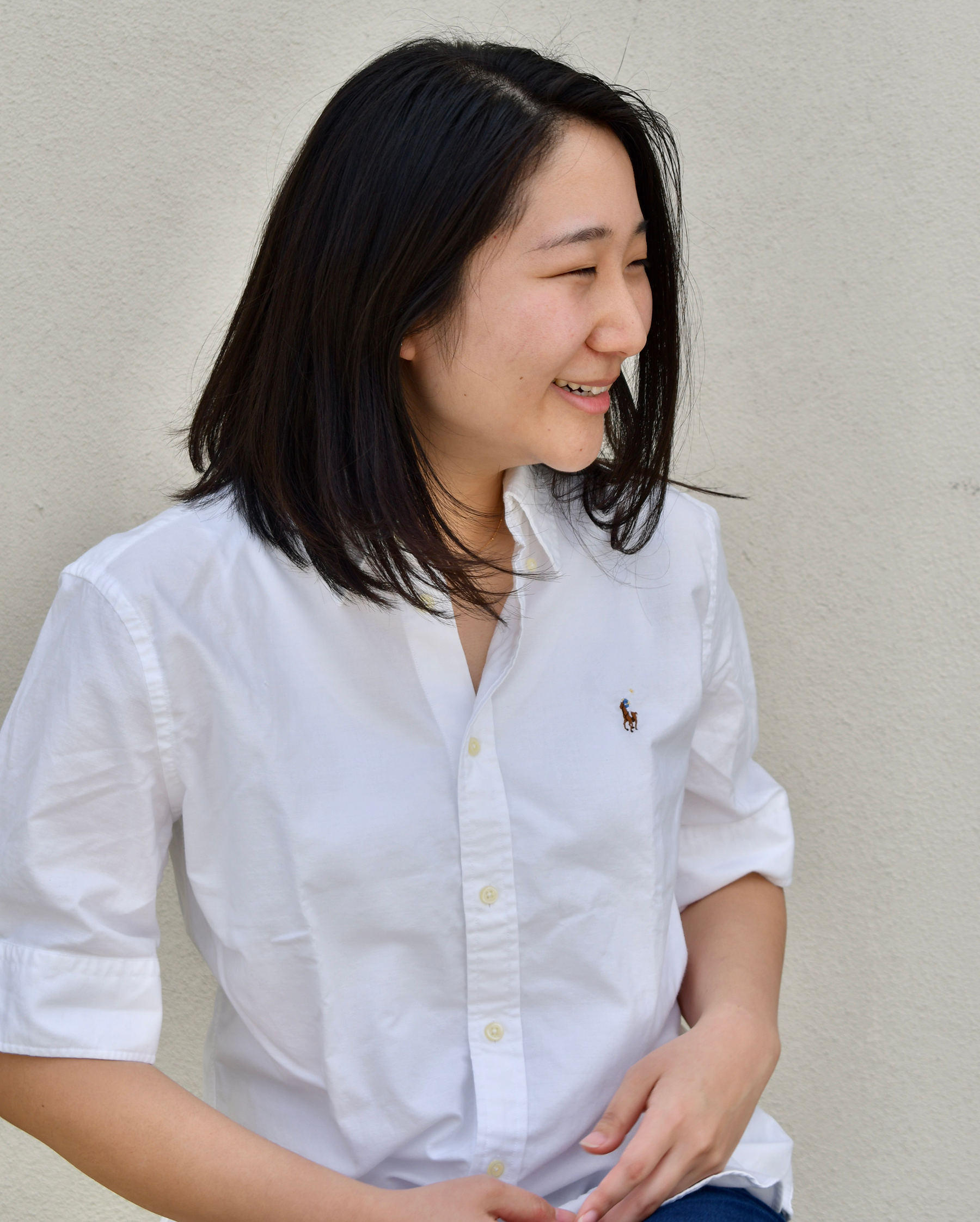
Product Design graduate Mana Koike, graduating with honors, a minor in Designmatters and as the Spring 2020 Student Leadership Award recipient, grew up splitting her time between Tokyo and Boston. She was recognized for her willingness to take on challenges of increasing responsibility and growing as a designer and leader during her time at ArtCenter. On campus, she worked on the Summer 2018 initiative that encouraged graduates to reduce waste and make smart materials choices in creating, installing and removing their grad show exhibits. Following the advice of then department chair, now Provost, Karen Hofmann, Mana joined a Designmatters study away program in Shanghai China, where she was hailed as a true leader by organizers and an advocate of the program on her return to campus. Mana credits her participation in the Portland Footwear Design program with teaching her to “manage up, manage down, manage around.” There, she experienced the challenges of leading a team, ultimately steering the multidisciplinary group to create high-level concepts to present to professional designers in the athletic industry. Returning to campus, she recalls, “I was a completely different person in the best possible way and I shared my excitement and gratitude in info sessions, where I spoke about my personal growth and encouraged others to not be afraid of taking risks.”
Described as being respectful of others and sensitive to the nuances within a group or with individual, faculty members observed Mana’s peers and teammates looking to her for direction and leadership. Serving as a teaching assistant and peer mentor, she dedicated time inside and outside the classroom to help her fellow students find their true voice,
Mana has dreamed of becoming a designer since she was ten years old. “Now,” she says, “thanks to ArtCenter, I’ve become more than just a designer. I’ve become a critical thinker, an empathetic team player and a confident leader.”
The Nominees
“Though I believe leadership means being able to take responsibility, hear the voices of others and collaborate with those other voices in achieving set goals,” remarked nominee Patrick Kim, “I’ve also come to realize that not knowing what you’re doing while leading is OK too. Hesitance, uncertainty and ambivalence are all part of a process of understanding the self and understanding the complications that come with the self to grow stronger as an individual.”
A third-generation Korean-American, Fine Art graduate Patrick Kim, graduating with distinction, found himself at ArtCenter. Arriving on campus anxious, closeted and fearful, he felt welcomed and accepted by his Orientation leaders and the support he found here gave him the courage to come out to his family, who were also supportive and loving. Embracing the love and acceptance he found at ArtCenter, Patrick became deeply involved in student government, spearheading a number of efforts to improve the student experience on campus, culminating in his participation in Orientation as a leader and mentor for others, providing the same warm, accepting welcome to others that he received.
Coming to ArtCenter from Bombay, India, Graduate Graphic Design Masters candidate Angad Singh, described as “such a beautiful and bright soul” who “rarely goes unnoticed because of the energy he brings to everyone around him,” spread sunshine on the fifth floor of the 1111 building for three years as he studied, served as an assistant in the department office and worked as a teaching assistant. Reflecting on his experience, he notes, “I found that helping others achieve what they wish to achieve has been as fulfilling as accomplishing my own goals.”
For first-generation American Patrick Nguyen, being accepted into UC Berkeley with plans to pursue a degree in mathematics, was a dream come true, not only for him, but also for his parents, who fled Vietnam for the United States at the end of the Vietnam war. His creative spirit, however, was too strong and he cut short his studies at Berkeley to take art and design classes, building his portfolio. “ArtCenter has an incredibly special place in my heart,” he explained, “it is the place that allowed me to truly express myself as an individual.” Following his father’s example of dedicating himself to his community, while at ArtrCenterv Patrick served as an Admissions Ambassador, Orientation Leader, Teaching Assistant and as President of the Student Body.
Coming from Indonesia, Environmental Design graduate Amanda Sutanto, who will be graduating with honors and a minor in Social Innovation, struggled with culture shock as she adjusted to a new country and the rigors and demands of an ArtCenter education. Her experience gave her the desire to help others and she joined with friends to create an Indonesian event on to share her culture with the community and connect with other Indonesians. “Through my journey at ArtCenter, I learned to embrace my struggles by being compassionate with my community, constantly willing to step out of my comfort zone, and challenging the norms,” she declared, “these experiences transformed me into a better leader and person. I am able to create by understanding and lead with empathy.”
She is described by faculty as being exceptionally diligent, driven and talented, and simultaneously collaborative, caring and compassionate. Her commitment to social change and improving everyday life was lauded and one faculty member stated simply, “she is one of the most hard-working and creative students I’ve had the pleasure to meet.”
With a smile and a warm greeting, Jessica Lauer (who will be receiving a degree in Environmental Design with honors and a minor in Social Innovation) sought out to lift the mood of everyone she encountered on campus. Entering ArtCenter as a quiet person who lacked confidence, she noticed a lot of glum faces her first day on campus. She made a conscious decision that day to acknowledge every person she encountered with a warm smile and friendly greeting. She credits this decision with changing the course of her ArtCenter experience, and perhaps in turn, her life. Her friendly attitude ensured that she got to know and become develop relationships with students ifrom other departments, as well as faculty and staff. Immersing herself in the ArtCenter experience, she worked in the Center for the Student Experience (CSE), served as the Environmental Design department representative on student government, and participated in a Study Abroad experience in Japaa problem or need and then taking charge of the solution. Jessica saw a community that was not connected and stressed out and she set out to change that one smile at a time. In the process, she made important relationships that motivated her to push herself and, as she says it, “because of ArtCenter, I have become more of the confident designer and person I have always wanted to be.”
Driven, but with a “quixotic and jovial spirit,” is how Advertising graduate Breauna Abiad, describes herself, “at the end of each term, I’d finish strong with my name on the Provost’s List, work up in the gallery and hungry for a new challenge.” She became involved in Designmatters, participated in Testlab in Berlin, worked as a teaching assistant and, served at the lead Speaker Coordinator for the entirely student-produced TEDx event. It was during this time period that she was diagnosed with ulcerative colitis, an autoimmune disease that can be debilitating at times. Breauna suffered her most serious flare-up during the preparation for TEDx, landing her in the hospital and out of school for a week. She returned the following week to lead her team. “Ultimately, my battle with ulcerative colitis has taught me how to punch through what feels heavy and gives me the power to find a light that will always help lead others home.” Breauna graduates today with distinction and a Minor in Social Innovation.
Tricia Sada will be graduating with honors, a minor Social Innovation and a degree in Product Design today. She served as president of the ArtCenter Christian Fellowship and founded two other student groups. She also worked as an Orientation leader, peer mentor, teaching assistant, admissions student worker, represented both Product Design and Designmatters at ArtCenter’s Open House, volunteered with the Career and Professional Development department, participated in three sponsored projects, traveled to and studied in Singapore and Portland and completed two internships and one Designstorm. Students who wrote in support of her nomination for this award describe Tricia as someone who is engaged and involved but “never lets her achievements crowd out her sense of kindness for others.”
ArtCenter thanks and congratulates all the nominees for their commitment and dedication to making the College a more compassionate, transformative and life-changing environment for all of us.