Survey: Art Center ranks No. 1 for industrial design

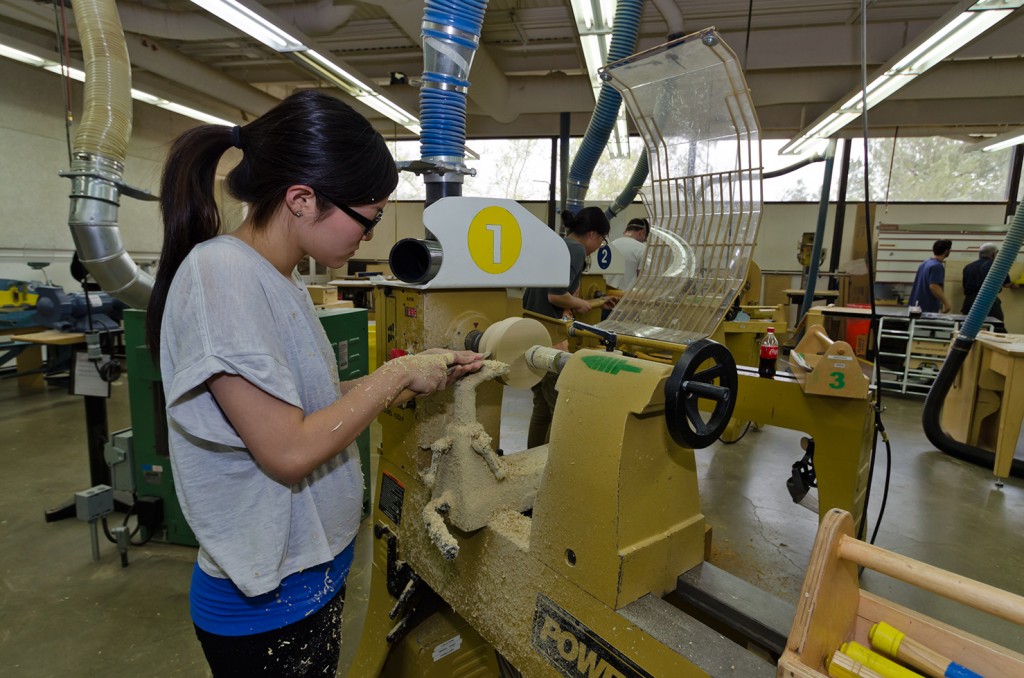
Art Center’s industrial design graduate and undergraduate programs have ranked No. 1 by the Design Futures Council in its DesignIntelligence survey of America’s best architecture and design schools.

Additionally, DesignIntelligence named Integrated Studies instructor Randall Wilson among the 30 Most Admired Educators for 2013.

Art Center’s undergraduate industrial design programs — which include Product Design, Environmental Design, Transportation Design and Entertainment Design — were praised for teaching students communication, computer applications and design.

Deans and department heads surveyed said they most admired Art Center’s Graduate Industrial Design program, “For its forward-looking focus on the role of design in business and research.”

Art Center’s industrial design undergraduate program has ranked No. 1 in the survey since 2006, while the graduate program has ranked in the top three during the same time.

Continue reading

Share this:Email this to someoneShare on FacebookShare on Google+Tweet about this on TwitterShare on LinkedInPin on PinterestShare on Tumblr

Veterans Day 2012: Three patriotic, artistic things to do

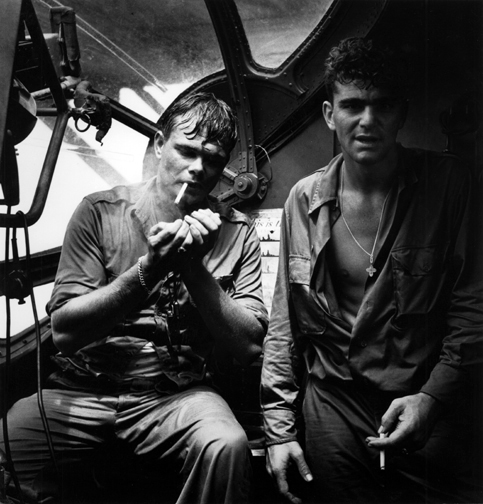
Alum Horace Bristol's Rescued Airmen Smoking Aboard the PBY (1944)

Veterans Day marks a three-day weekend (the school is closed Monday) and time to salute our veterans. Here, we round up a few suggestions of film, music and video games that also honor service members.

Game on: Metal of Honor Warfighter

As part of a six-city, 8-bit salute, Operation Supply Drop will host a single-elimination Medal of Honor: Warfighter tournament in the game lab of the Los Angeles Film School. Gamers will shoot for a chance to win prizes and to play side-by-side with celebrity battle buddies Michael Broderick (voice of Tick from Medal of Honor: Warfighter), Tyler Grey (military technical advisor for EA Games) and Derrick Dockery of the Dallas Cowboys.

Los Angeles Film School, 6363 Sunset Blvd., Hollywood. For more information, email tonymoney@iamshifted.com

G.I. Film Festival

The first annual festival dedicated to telling service members’ stories kicks off Friday at 7 p.m. with Disney-turned-Broadway star Christy Carlson Romano being honored for entertaining troops and the premiere of “The Red Machine,” a spy-thriller set in pre-war Washington, D.C. A series of screenings are set for Saturday from 12:20 to 8 p.m., including “The Lost Airmen of Buchenwald,” “8:46″ and “From Philadelphia to Fallujah,” which will be capped off with a dinner and auction featuring actor and former marine Dale Dye.

Admission starts at $12 per person; service members and veterans receive a discount.

Los Angeles Film School, 6363 Sunset Blvd., Hollywood; www.gifilmfestival.com

Continue reading

Share this:Email this to someoneShare on FacebookShare on Google+Tweet about this on TwitterShare on LinkedInPin on PinterestShare on Tumblr

For Media Design Practices, two tracks better than one

From high-tech research to creating social change, the Media Design Practices program’s two new tracks foster a hotbed of ideas. Department Chair Anne Burdick explains how.

Dotted Line: Why did you recently introduce two tracks?

Anne Burdick: Bringing new practices to design and media is a key aim of our program. So when we see an emerging direction that offers our graduates opportunity and adventure, we go for it.

We saw our alumni generally heading in one of two very different directions: future-oriented research and experimental media or on-the-ground social engagement. We felt if we created a curricular experience tailored to these orientations, we could create a vibrant dialogue and an environment that becomes a hotbed for new ideas.

DL: Talk about the two tracks.

AB: The two tracks are Field and Lab. The curriculum for each is built on a project-based model in which students approach complex situations from multiple perspectives. But the time frame and context that structures their work differs substantially.

Lab track prepares students for work in high-tech, future-focused settings. Before working on a thesis project, Lab students work on five “inquiries”— three-week intensives in which they investigate recent advances in culture, science and technology. Each inquiry is team-taught with researchers, experts, and industry leaders.

Continue reading

Share this:Email this to someoneShare on FacebookShare on Google+Tweet about this on TwitterShare on LinkedInPin on PinterestShare on Tumblr

Goodwill and Art Center embrace the upcycle lifestyle

Art Center students, faculty and representatives from Goodwill of Orange County. Photo: Chuck Spangler

Last term, more than a dozen Art Center students in Goodwill: Upcycle Lifestyle—a transdisciplinary Designmatters studio led by the Environmental Design department—spent their summer redesigning the spatial experience for Goodwill of Orange County’s retail stores, with an eye towards social responsibility, environmental awareness and making a positive impact on the community.

The students’ challenge was two-fold:

First, they were assigned to use recycled materials—wood, computer parts, textiles and more, all of which were found in Goodwill’s stores, recycling, salvage and processing areas—to create a visual and tactile experience for shoppers that reflects Goodwill’s reuse and repurpose model. Hence, the name of the course: Upcycle Lifestyle.

Second, the students were tasked with leveraging Goodwill’s community-strengthening programs. Beyond offering guilt-free shopping opportunities (and bargains!) to consumers, the non-profit organization’s stores and donation sites also serve as training grounds to provide supportive work experience and on-the-job training.

Throughout the three-month project, the students gained experience in re-branding, upcycling, budgeting, repurposing, practical design applications and a deeper appreciation of Goodwill’s mission services.

Following multiple visits to Orange County Goodwill stores, the students split into five separate teams, developed concept drawings and materials studies, which culminated in a final in which they presented design boards, models, mock-ups and full-scale constructs to representatives from Goodwill.

How did they do? Visit the project’s page on the Designmatters website to find out.

Related:
Designmatters’ Safe Agua Peru wins Tech Award
WATCH: Art Center President Lorne Buchman talks conscious design
Designmatters Students Create Furniture for India’s Low Income Housing Residents

Share this:Email this to someoneShare on FacebookShare on Google+Tweet about this on TwitterShare on LinkedInPin on PinterestShare on Tumblr

Yahoo! names Tesla Model S car of the year

Yahoo! Autos tested 100 vehicles — from the amped-up Ford Shelby GT500 to the pared-down Toyota Prius C — and named the Tesla Model S their 2013 car of the year.

Art Center alum Franz von Holzhausen and a team of 11 spent eight months designing the Model S, an electric luxury sedan styled somewhere between a Jaguar XJ and an Audi A7.

Bucking the electric car stereotype, the $50,000-and-up Model S goes form zero to 60 mph in 4.4 seconds and seats seven with room for groceries. Designers took a page from the aviation industry adding 17-inch center-console screen with connectivity to the Web, navigation and the car’s systems.

Continue reading

Share this:Email this to someoneShare on FacebookShare on Google+Tweet about this on TwitterShare on LinkedInPin on PinterestShare on Tumblr

Designer Simon Johnston on Factory Records, Q-Tips, lawyers, self-destructing magazines

Simon Johnston with his work "Investigation" at the "PAGES" exhibition opening. Photo: Chuck Spangler

Students recently packed an overflowing Los Angeles Times auditorium for 3×3*: Type Guys, an event that featured three presentations and a lively Q&A with three individuals that have crafted the way we see, understand and interact with typography.

Previously we shared highlights Kyle Cooper‘s and Jeremy Mende‘s presentations. Today we focus on Art Center’s own Simon Johnston.

Johnston was educated at Bath Academy of Art in England and the Kunstgewerbeschule, Basel, Switzerland. In England he founded the design practice 8vo, as well as the influential typographic journal Octavo. Since relocating to Los Angeles in 1989, he has run his own design office, Simon Johnston Design, with a particular emphasis on typography, especially book and catalog work for museums and galleries.

Johnston has taught typography and design at Art Center for 20 years. He is currently faculty director of the print area of emphasis in the Graphic Design department. In addition to his teaching and design practice, he works on his own art and photography projects.

At the event, Johnston touched on a variety of topics, including the importance of typography, working with some of his idols and the minefield of registered trademarks.

Here are just a few of the highlights:

On typography:
There’s an old joke: It’s the scene of an accident, a crowd is gathered around an injured person, and from the back of the crowd a voice is heard, “Let me through! I’m a typographer!” Typography may not be a matter of life and death, but as visible language, it is the key means through which we communicate as a society, and as such it’s the spine that runs through the body of graphic design practice.

Continue reading

Share this:Email this to someoneShare on FacebookShare on Google+Tweet about this on TwitterShare on LinkedInPin on PinterestShare on Tumblr

IxD leader Maggie Hendrie sizes up future of smartphones

IxD Dept. Chair Maggie Hendrie

IxD Dept. Chair Maggie Hendrie

Apparently, size might not matter — at least when it comes to the future of smartphones.

The tech world was buzzing this week with news that IBM might have found a way to make microchips smaller, cheaper and faster by substituting silicon with carbon nanotubes.

(Developments in the silicon microchip were what allowed big-as-brick cell phones to shrink to pocket-size smartphones and tablets.)

But Maggie Hendrie, Interaction Design Department chair at Art Center, told Marketplace that size isn’t the most important feature for smartphones when looking ahead.

Continue reading

Share this:Email this to someoneShare on FacebookShare on Google+Tweet about this on TwitterShare on LinkedInPin on PinterestShare on Tumblr

Designer Jeremy Mende on ‘anxious futurism,’ petroleum, biorhythmic data

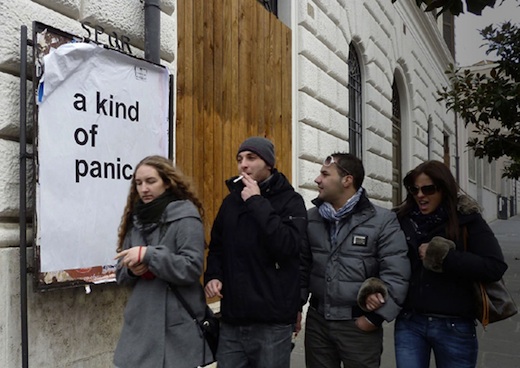
Jeremy Mende's "100 Years from Now" installation in Rome.

Students packed an overflowing Los Angeles Times auditorium last Thursday night for 3×3*: Type Guys, an event that featured three presentations and a lively Q&A with designers Jeremy Mende, Kyle Cooper and Art Center’s own Simon Johnston—three men that have crafted the way we see, understand and interact with typography.

Last week we gave you highlights from Kyle Cooper’s presentation. Today we focus on San Francisco-based Jeremy Mende, an associate professor of design at the California College of the Arts, where he teaches experiemental typography and critical theory.

In 2000, he founded MendeDesign, a firm that describes itself as creating “unique, poetic and unexpected messages” and that believes that beauty and authenticity have a “critical role in producing things of value and durability.”

Mende has been recognized internationally for his work and has pieces in several collections including at SFMOMA. In 2010-11, he was the Rome Prize Fellow in Design at the American Academy in Rome.

At Art Center, he spoke with students about work he’s created that meet at the “interesection of [his] interest in psychology and [his] interest in design and [his] interest in typography.”

Continue reading

Share this:Email this to someoneShare on FacebookShare on Google+Tweet about this on TwitterShare on LinkedInPin on PinterestShare on Tumblr

Flea, Carnegie Hall cellist to play at Art Center

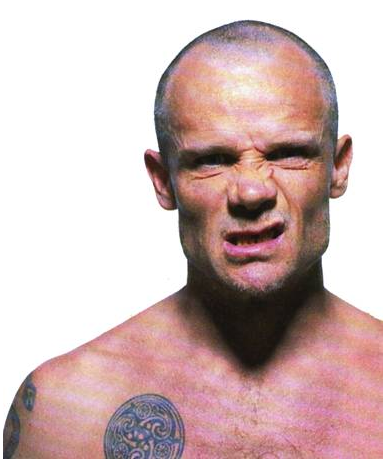
Flea, the famed (and sometimes pants-less) bassist for the Red Hot Chili Peppers, will share the stage at Art Center College of Design with some interesting company: a Carnegie Hall cellist and a Caltech physicist.

Part of the Muse/ique classical concert series, the show on Nov. 12 at 7 p.m. will explore vibrations of all kinds with a program that includes Bach, Coltrane, Vivaldi and the Beatles.

Crossover cellist Matt Haimovitz — known for his blend of pop, jazz and rock — will play a Jimi Hendrix-style version of the National Anthem on his 300-year-old Venetian cello. And Caltech physicist Sean Carroll will rap about String Theory, the idea that vibration is at the center of all life.

A pre-concert reception will include wine and tours of Art Center galleries. Tickets are $60; $10 for students (go to http://www.muse-ique.com and use promo code “Student”); and $30 for alumni, staff and faculty (use promo code ACenter).

Continue reading

Share this:Email this to someoneShare on FacebookShare on Google+Tweet about this on TwitterShare on LinkedInPin on PinterestShare on Tumblr